Tennessee Guard License Disqualifiers 2026: How SB1864 Will Impact You
Effective January 1, 2026, Tennessee Senate Bill 1864 (SB1864) introduces strict new disqualifiers for security guard licenses, most notably adding stalking convictions and a mandatory five-year post-sentence waiting period. Understanding these updated Tennessee guard license disqualifiers for 2026 is essential for current and aspiring security professionals to maintain their careers.
This guide breaks down exactly what SB1864 entails, focusing on the most significant additions and how you can prepare before the new rules take effect.
What is SB1864? A Plain-English Overview
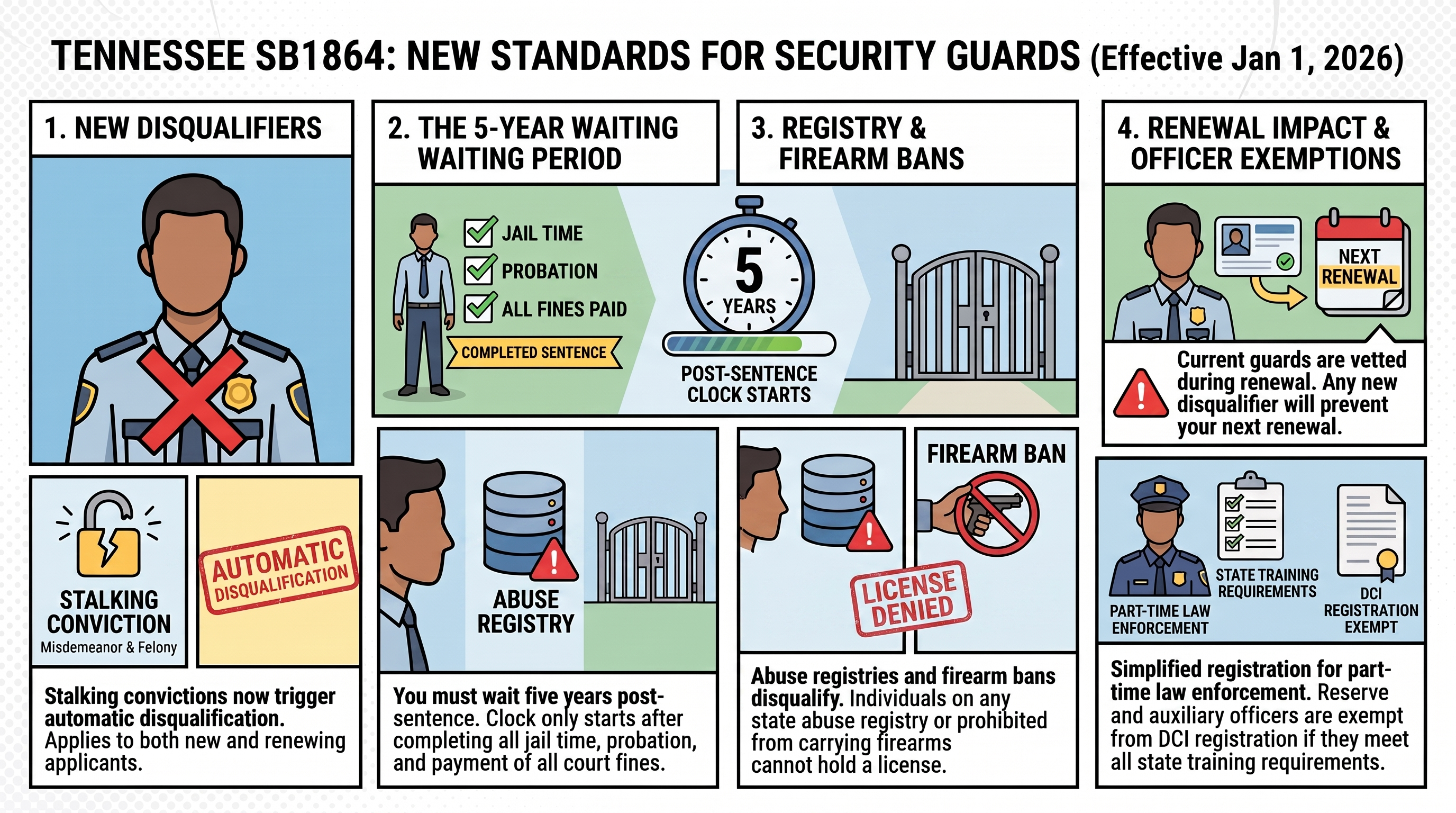
SB1864 amends the existing Tennessee code governing private protective services. The primary goal of this legislation is to enhance public safety and raise professional standards in the security industry by expanding the list of criminal offenses that automatically disqualify an individual from holding an armed or unarmed guard license.
Historically, disqualifiers have focused on felonies and specific misdemeanors related to violence, theft, and controlled substances. The new TN guard license rules under SB1864 add strict new criteria, reflecting a modern understanding of risk and personal conduct.
The Biggest Changes: Expanded Criminal Disqualifiers
While the bill includes several administrative updates, two major changes stand out for their potential to impact a significant number of current and future applicants.
Stalking Convictions Are Now a Major Hurdle
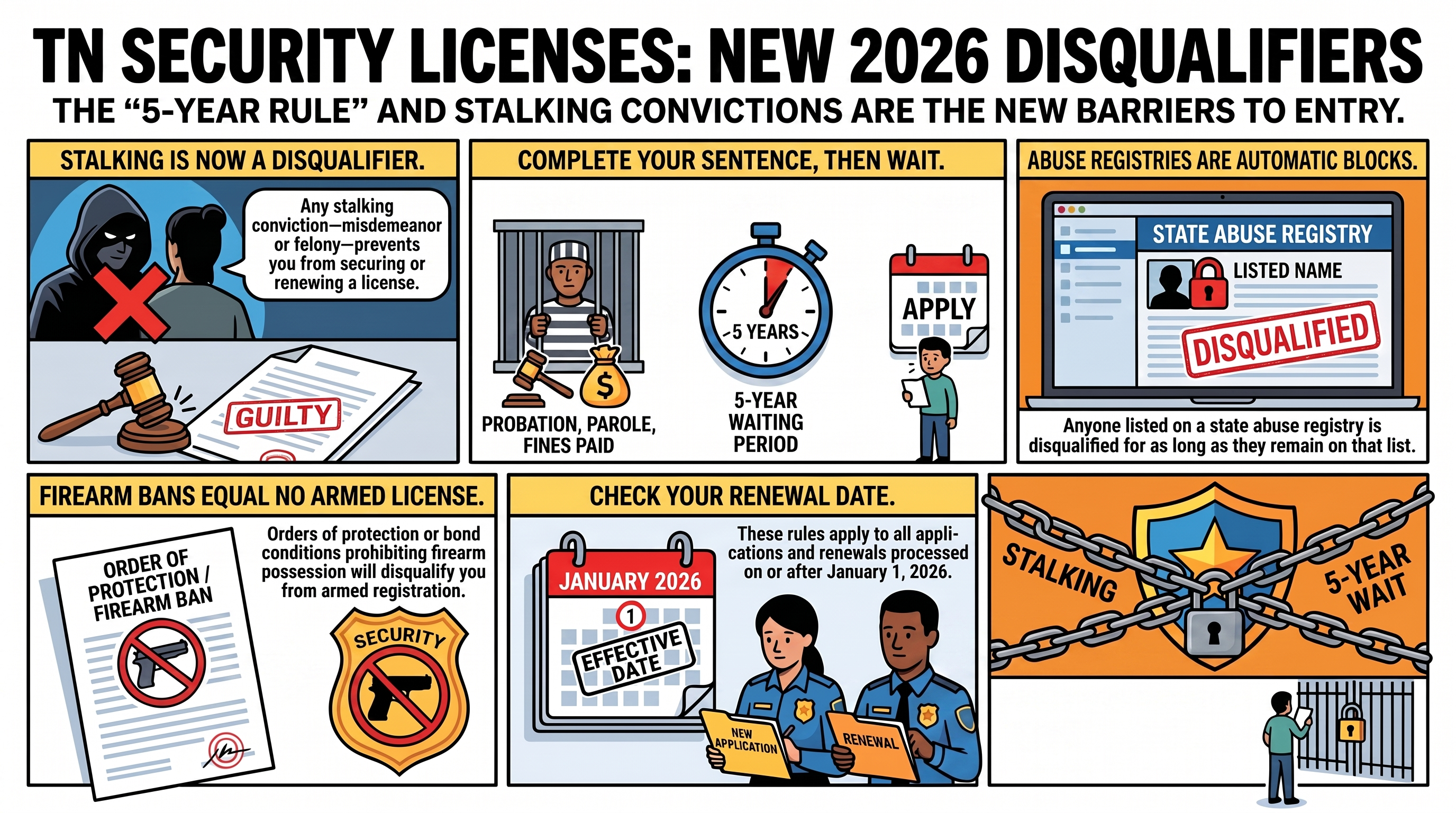
The most notable addition is the inclusion of stalking as a specific disqualifying offense. Starting in 2026, a stalking conviction on your record will automatically prevent you from securing or renewing a license.
The legislature included a stalking conviction security license disqualifier to achieve three main goals:
Protect the Public: Ensure individuals in positions of authority do not have a history of obsessive, harassing, or threatening behavior.
Elevate the Industry: Align the security profession with other licensed fields that enforce strict character-and-fitness standards.
Reduce Liability: Help security companies avoid negligent hiring claims by thoroughly vetting personnel against these stricter standards.
Note: This rule applies to both misdemeanor and felony stalking convictions.
The 5-Year Post-Sentence Waiting Period Explained
The second major change is the introduction of a mandatory five-year waiting period for applicants with certain past convictions.
Crucially, the clock on this five-year period does not start on the date of your conviction. It begins only after you have fully completed all terms of your sentence.
"Completion of Sentence" explicitly includes:
Release from incarceration (jail or prison).
Completion of any court-ordered probation or parole period.
Payment of all fines, court costs, and restitution.
Example Scenario: If you were convicted of a disqualifying offense and sentenced to three years of probation ending in 2023, your five-year waiting period begins at the end of that 2023 probation date. Under the new law, you would not be eligible to apply for a guard license until 2028.
Who is Affected by These New TN Guard License Rules?
The impact of SB1864 is widespread across Tennessee's private security industry:
New Applicants: Anyone applying for a security guard license for the first time on or after January 1, 2026, will be subject to the expanded background check criteria.
Current License Holders: These changes apply during your license renewal process. A conviction that was not previously a disqualifier (like stalking) could suddenly prevent you from renewing.
Security Company Owners: As an employer, you are responsible for ensuring your guards are compliant. The SB1864 Tennessee security guard law places a greater burden on companies to conduct updated background checks to avoid retaining non-compliant individuals.
How to Prepare for the 2026 Changes
Proactive preparation is the best defense against a potential career disruption. Do not wait until your renewal is denied to take action:
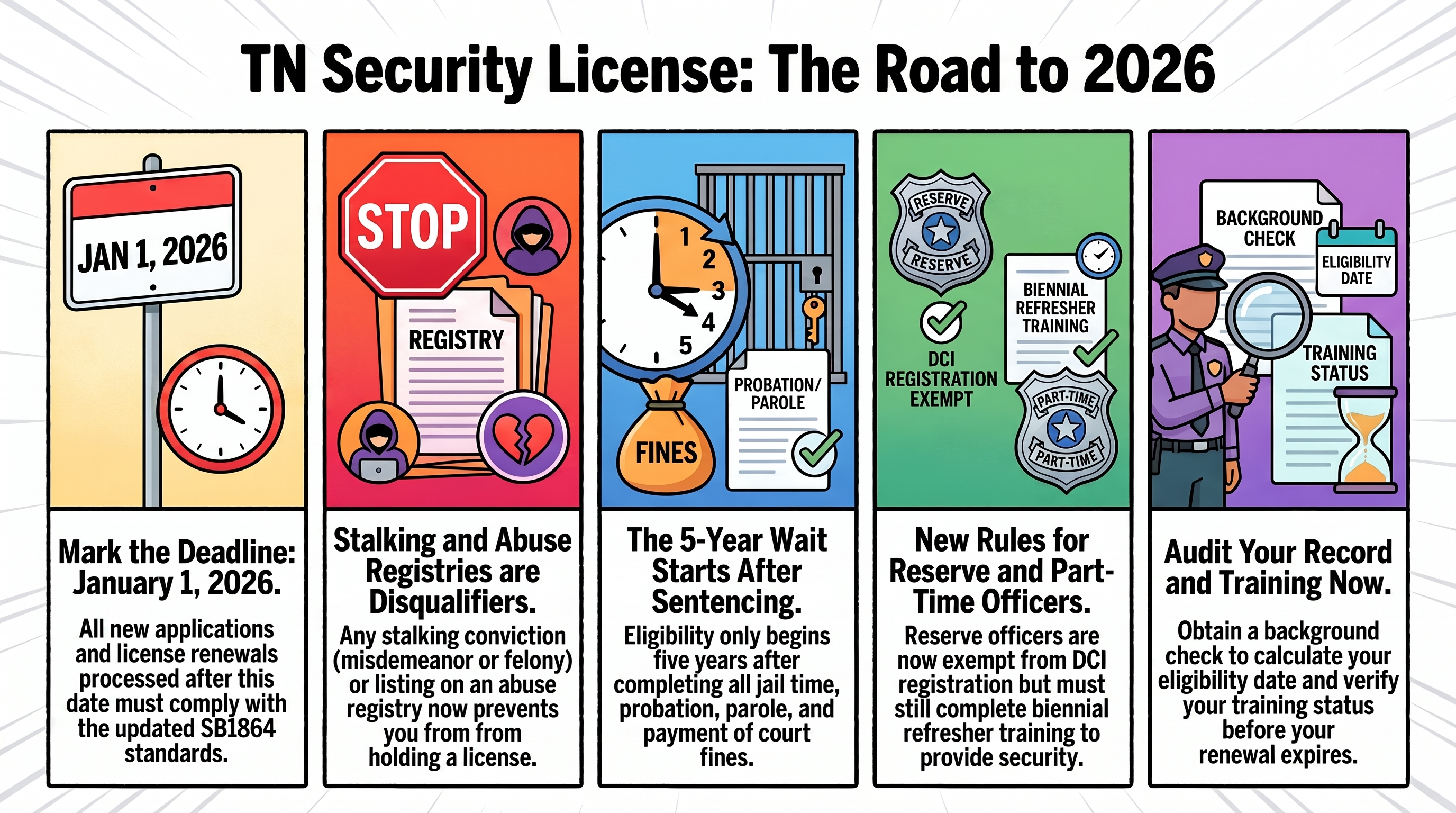
Review Your Criminal Record: Obtain a copy of your own background check. If you have any convictions, especially for offenses like stalking or domestic violence, you need to know exactly how they will be viewed under the new law.
Calculate Your Timeline: If you have a past conviction, determine your eligibility date based on the strict five-year post-sentence rule.
Seek Legal Counsel: If you are unsure whether a past conviction will be a disqualifier, consult an attorney specializing in administrative licensing law. They can advise you on potential options, such as expungement.
Stay Informed: Keep up-to-date with bulletins from the Tennessee Department of Commerce & Insurance (Private Protective Services).
Conclusion: A New Standard for Tennessee Security
By expanding the Tennessee guard license disqualifiers in 2026, the state is raising the bar for professionalism and public trust. The addition of stalking convictions and the strict five-year post-sentence waiting period are significant policy changes designed to ensure only suitable candidates serve in these critical roles. Understanding and preparing for these rules today is the key to securing your career tomorrow.
Need Help Navigating Your Security Career?
Are you concerned about how SB1864 might affect your Tennessee guard license? Do you need to get your training and certifications updated before the new year? Visit Alliance Training and Testing today to enroll in our state-certified online and in-person courses to ensure your career stays on track.
Frequently Asked Questions (FAQ)
When exactly do the new rules from SB1864 take effect?
The new disqualifiers and the five-year waiting period officially go into effect on January 1, 2026. All new applications and renewals processed on or after this date will be subject to the updated criteria.
Does the new stalking disqualifier apply to misdemeanor convictions, or only felonies?
The law applies to all convictions for stalking, regardless of whether it is classified as a misdemeanor or a felony.
How does the 5-year rule affect me if I just finished paying my court fines?
The five-year clock starts only after all aspects of your sentence are complete, including the payment of fines. In this scenario, your five-year waiting period began on the date your fines were fully paid.
Will my current guard license be revoked immediately on January 1, 2026?
No. The new rules are applied at the time of your license renewal. While your license will not be automatically revoked on January 1st, you will face non-renewal when your current license expires if you have a newly disqualifying offense.
Where can I find the official text of Senate Bill 1864?
You can read the full text of the bill by searching for "SB1864" under the 113th General Assembly on the official Tennessee General Assembly website.

Article by Angel Rodriguez CPP
Published 05 Jul 2026